Part 1: DIGITAL PRODUCTS: VIDEO TUTORIALS + BLUES HARP TAB SHEETS FOR DOWNLOAD
Welcome to the home of online blues harmonica lessons! In the spring of 2007, when YouTube was still in its infancy, I pioneered the delivery of blues harmonica teaching in the form of digitized, downloadable videos and tab sheets. "Modern" blues harmonica instruction was born!
I currently offer more than 70 lessons, most of them organized around specific songs. Except for the handful of introductory collections right up front, I've arranged them below in order of increasing difficulty, more or less, with the easiest lessons up front in the section marked BEGINNER / ADVANCED BEGINNER. (The lessons which require overblowing are all marked ADVANCED INTERMEDIATE and can be found at the very end.)
Each lesson is available two forms: as a video tutorial and as a tab sheet. The videos are in the same general style as my YouTube lessons, but focused much more specifically on a particular song and the techniques it requires. Players have the option of downloading either the video or the tab, or both. Although I always show the tab sheet onscreen in the video, the print is small; most players who purchase videos also purchase the accompanying tab. A few lessons ("Blues Scale," "Turnarounds," etc.) are appropriate for more than two levels. Particularly if this is your first visit to Modern Blues Harmonica, you should take the time to skim ALL the lessons below. I think you'll be impressed by the range of my offerings.
----------->check out the LESSON PLAN for success<----------------
All of my videos and tabs are warehoused at www.tradebit.com, an innovative filehosting site. Click this link if you'd like to download a COMPLETE LIST of my video lessons and tabs as a searchable, hyperlinked Excel spreadsheet:
NOTE: If you want to just cut to the chase and buy ALL my videos and tabs in one huge (3 gig) zip file, you can do that HERE. A $500+ value, all for only $150. One and done.
NOTE: If you have an iPhone or iPad and wish to purchase and use my digital products, you'll do just fine with single files (videos and tabs), but you'll need to download and install a free un-zipper app in order to use any of the zip files: the various multi-file assemblages, including the Beginner's and Advanced Beginner's Specials, the other big-package specials, the jam tracks and YouTube collections, and the various albums for sale here. Here's the app.
PLEASE ALSO NOTE: if you have any trouble AT ALL, at any point, downloading and using my files, or if you're just apprehensive about the whole download process, please visit the following page:
For beginning blues harmonica players who want a quick immersion in blues harp basics, I've bundled four beginner's video tutorials into an easy-to-download zip file, with the tab sheets thrown in for free. You get "Floyd's Hotel," "Shuffle Blues Rhythm," "Stompin'," and "Basic Blues Harp: Bending the Four Draw," all for under $20. Please note: You should work through the videos and tabs in the order I've listed them here. (Note: If you're an absolute novice (a "raw beginner"), you may want to begin with my lesson entitled "Raw Beginners Start Here," below, followed by "Oh Susannah," also just below. Most beginners, though, do just fine starting with this Beginner's Special.)
PLEASE NOTE: All these songs are demonstrated using a key of C harmonica.
For novice blues harmonica players who want EVERYTHING that beginner can possibly need at a surprisingly reasonable cost, here's the ticket: You get the MBH Beginners Special--four beginners' videos with the tab sheets thrown in for free, all in one big zip file--PLUS the following:
§Raw Beginners Start Here (video)
§Oh Susanna (video + tab)
§Counting and Playing 12-bar Blues (video + tab)
§Blues Harmonica Playalong Sessions (jam tracks + one-hour video on how to use them)
After working through these lessons, and with sufficient practice, you'll know how to hold the harmonica and make wah-wah and warbling sounds; you'll know how to produce clear and sonorous single notes, double stops, and chords; you'll be able to play your way through two different 12-bar blues songs plus a folksong standard; you'll have a solid chord rhythm under your belt; you'll be able to produce a bluesy bent note; you'll understand the inner logic of the all-important 12-bar blues pattern; you'll have a bunch of jam tracks to boogie along with; and you'll be filled with ideas for HOW to jam along.
Modern Blues Harmonica Advanced Beginner's Special
For beginning players who have completed the first handful of lessons on my website (most of which can be found in the "Beginner's Special" and "Beginner's Deluxe," above) and are ready to commit to the next step, here is a bargain: six video tutorials with the tab sheets thrown in for free. The lessons in this collection continue your education into the world of blues harmonica by teaching you a range of ways of moving through the 12-bar changes--the "blues progression." These include a boogie-woogie (Bittersweet Boogie), a melody drawn from a vocal line (Same Old Blues), a jazzy melody that deliberately breaks across the bar lines (Whistlin' the Blues), a two-beat stomp that uses double stops and chords (Red Dress), a simplified version of a Chicago blues standard (Mojo 1.0), and a rock classic (Rock Around the Clock). There is a method in Gussow's madness! These songs socialize you into the wide and wonderful world of blues musicianship, even as they develop your lip-strength, coordination, and reflexes.
PLEASE NOTE: All these songs are demonstrated using a key of C harmonica, except for Mojo 1.0, which uses a key of A harmonica.
ADDITIONAL NOTE: You do NOT need to know how to bend notes in order to play these songs. This is why they are appropriate for beginners and advanced beginners.
For INTERMEDIATES and ADVANCED INTERMEDIATES who want to plunge right into the heart of the blues harmonica tradition, I've bundled five video tutorials on classic songs by the best of the best into an easy-to-download zip file, with the tab sheets thrown in for free. Included in this package are Little Walter ("Blues With a Feeling"), Big Walter ("Have a Good Time"), James Cotton ("How Long Can a Fool Go Wrong"), John Lee "Sonny Boy" Williamson ("John Lee Williamson's Blues"), and Sonny Boy "Rice Miller" Williamson ("Sonny Boy's Blues"), all for only $25, a savings of $10 off the item-by-item price.
For INTERMEDIATES and ADVANCED INTERMEDIATES who want a selection of the best that the Chicago blues tradition has to offer, I've bundled five video tutorials into an easy-to-download zip file, with the tab sheets thrown in for free. Included in this package are Sonny Boy Williamson/Junior Wells ("Checking Up on my Baby"), Junior Wells ("Messing With the Kid"), Big Walter Horton ("Easy"), Paul Butterfield ("Born in Chicago"), and Little Walter/Kim Wilson ("Got My Mojo Working"), all for only $25, a savings of $10 off the item-by-item price.
For blues harmonica players of ALL levels: a set of 11 jam tracks (46 minutes total) plus a 58-minute video by Adam Gussow in which he shows you how to play along with each track, offering a wealth of tips, hints, and suggestions to help you make the most of your practice time. "Play Along Sessions" (2007) is the creation of the Hills Blues Collective, a well-known Dutch trio featuring Martin Hills van Heuvelen (bass), Little Steve (guitar), and Theo Thumper (drums). The eleven tracks, professionally recorded, feature shuffle, swing, rhumba, rock, funk, and slow blues grooves--the core of the urban blues tradition--in the keys of D, E, F, G, and A. In order to play along with all the tracks, players will need harps in the keys of A, B-flat, C, and D. (Only one track requires a B-flat.) On two of the songs, a G harp will also work.
For players of all levels, a comprehensive tuneup that will deepen your tone, strengthen your chops, and give you the tools you need to develop a rich, resonant vibrato. Please check out the preview on the webpage below, and note that there is NO tab sheet for this lesson. It's all about tone:
For players of all levels, I give you a series of foundational principles for successfully amplifying your harp and getting that full, rich, ballsy Chicago/West Coast sound made popular by Little Walter, Big Walter, Paul Butterfield, Kim Wilson, and many other classic and contemporary players. I talk about mics, cupping techniques, speaker cone size, even and odd harmonics, solid state vs. tube (valve) circuitry, and the importance of overdriving every stage of the mic/preamp/poweramp/speakercone chain. Using my collection of vintage Fender, Premier, and Kay amps as evidence, I explain the magic of small-magnet speakers and show you the way in which speaker configuration affects the amp's sound and playability. Every amp has an ideal operating range, above which it feeds back but below which it refuses to sing; I show you how to dial this in. Note: this item is a zip file consisting of a long (56 minute) video plus an article I wrote for The American Harmonica Newsletter in 1993 entitled "Getting the Big Sound: Adam's 10-Point Guide."
Here, in a easy-download zip file, are mp3s and tabs for a pair of classic blues: Big Walter Horton's "Easy" and Jimmy Reed's "You Don't Have to Go." The mp3s are taken from "Adam Gussow and Charlie Hilbert: Blues Classics," a recent Modern Blues Harmonica release. I blow harp over Charlie's guitar on the first track. On the second track, recorded in New York City with a full band that includes guitarist Wild Jimmy Spruill, I call and respond to singer Grace Brimage. Both harmonica parts include an overblow or two, but 98 percent of what's here fits into the INTERMEDIATE / ADVANCED INTERMEDIATE category and requires no overblowing. NOTE; The tab sheets were created by Wayne Snyder in his own easy-to-read version of Gussow's tabbing style. They are good, solid tabs and will greatly ease your journey towards mastering the harp part on both cuts. Wayne is the only "outside" tabber I feature at Modern Blues Harmonica. I'm playing an A harp on "Easy" and a B-flat harp on "You Don't Have to Go."
Overblowing is an advanced technique that is just beginning to make its presence felt in the world of blues harmonica. Jazzman Howard Levy showed us the way back in the 1980's, but few blues players followed his lead. Carlos del Junco was one; I was another. Both of us were actively deploying overblows in blues contexts by 1990. Chris Michalek followed soon after. These days, Jason Ricci is the foremost exponent of the overblowing approach in an amplified context, and younger players such as R.J. Harman and Jay Gaunt make it clear that the technique is here to stay as one key element of a contemporary blues harmonica style. If you're looking to investigate the world of overblowing from a blues player's perspective, then this zip file is the high-octane fuel you need. This collection gives you a focused lesson--video and tab(s)--on five songs. One of them ("Sunday Drive") is straight ahead amped-up blues; three are jazzy blues variants ("Blue Monk," "Watermelon Man," "Tenor Madness"), and one is a jazz standard ("St. Thomas"). NOTE: This collection is for ADVANCED INTERMEDIATES, and especially for those who are already capable of making an overblow or two. Although it will supply you with a few tips for HOW to overblow, the primary purpose of these lessons is to show you how to INCORPORATE overblows into blues harmonica playing.
"Raw Beginners Start Here": For absolute novices. If you were my private student and you showed up for your first lesson with a harmonica that you'd just purchased (or that somebody had just given you), I'd spend most of our first hour together showing you the basics: How the harmonica is put together; how to hold the harp; how to play single notes; how to play your first scale; and how to troubleshoot several basic problems that raw beginners always confront. The difference is, a private lesson would cost $60. This 48-minute video costs $4. Please hit the link below and check out the free preview on the upper left side of the Tradebit product page:
"Oh Susanna": a classic American folk song, adapted for harp. During my two decades of harp teaching in New York City, this is the song I always gave beginners in Lesson #1. If you're a novice, START HERE! This will give you the basic techniques needed for superior blues harmonica playing.
"Counting and Playing 12-Bar Blues": an extra-long (45+ minutes) and extra-important lesson for beginning players. In response to popular demand, I've done my best to demystify the 12-bar blues format and help you navigate your way through a foundational experience. This lesson contains one video and two FREE tab sheets!
"Stompin'" ( appropriate for BEGINNING players, but of possible interest to ADVANCED BEGINNERS who have trouble keeping the beat through 12-bar blues changes)
"Bittersweet Boogie": an original 12-bar blues for BEGINNERS and ADVANCED BEGINNERS. This song carries a boogie-woogie line through the changes and offers workable technical challenges for developing players, with a focus on tongued articulations and the incorporation of chord rhythms into a continuing melodic structure.
"Same Old Blues": An original 12-bar blues for BEGINNERS and ADVANCED BEGINNERS. Like "Bittersweet Boogie" (above), this is an excellent workout for developing players who don't bend much (or at all) and want to play something that is recognizably a blues. Good synthesis of single note melodies and chord rhythms. Serious blues harp begins here.
"Put on Your Red Dress": yet another classic blues, arranged for BEGINNERS and ADVANCED BEGINNERS. Double-stops are worth mastering, and this song is a vigorous double-stop workout. Some may remember this as the theme song to "Sesame Street." It's also a real blues--a two-beat stomp that will get the boys hooting and clapping at your corner bar.
"Mojo 1.0": a simplfied version of Muddy Waters's "Got My Mojo Working," a perennial classic. This video focuses on a two-page tab; the first page is one that beginners can handle--it'll get you rocking--but the second page is solidly in the advanced beginner category. (INTERMEDIATES will get a workout on it, too.)
"Rock Around the Clock": Bill Haley's rock 'n' roll hit from the mid 1950s, adapted for harmonica. I've worked up two versions--one for BEGINNERS, one for ADVANCED BEGINNERS and INTERMEDIATES--and put them both in the same video tutorial, with each tab sheet only $1.
BASIC BLUES HARP: FUNDAMENTAL TECHNIQUES FOR BEGINNERS & ADVANCED BEGINNERS
"Bending the 4 Draw": For most beginners, the 4 draw bend is easiest--and therefore the first that I've always introduced to my students. This video offers a wealth of tips, metaphors, and suggestions to get you bending and bending well. There's also a series of eight exercises that help you consolidate and expand the technique. Please note: Bending requires a fairly well-developed ability fo play clear, leak-free single notes. You should NOT purchase this video until you've worked through at least THREE of the lessons above.
"Bending the 2 Draw": The 2 draw bend (one whole step down) is the flat seventh: a key note in the blues scale, and one that beginners need to master after they've developed some basic bending ability on the 4 draw. This video will get you where you need to go.
"Bending the 3 Draw": NOT just for BEGINNERS and ADVANCED BEGINNERS, but for INTERMEDIATES as well. The 3 draw bend--several different bends, actually--is more challenging than 4 draw and 2 draw. Gussow helps you extract the deep bluesy sound that lies buried in the harp; he uses a guitar to explain exactly which pitches you're trying for and where they're located.
"Blues Scale": All blues harp instructors teach a version of this; it's that important. The QuickTime video lesson is supplemented by a PDF tab entitled "Blues and Country Scales." This is ideal for ADVANCED BEGINNERS (it requires 2, 3, and 4 draw bends), but BEGINNERS will learn critical information from this and INTERMEDIATE players will benefit from this tuneup.
"Country Scale": The Grand Ol' Opry counterpart to the blues scale. This should be part of every blues harmonica player's armory, since you never know when the band will throw you a curveball. Charlie McCoy, Jimmy Fadden, and Mickey Raphael know all about this country scale.
"Harmony for Improvisation": For blues harmonica students in the BEGINNER and ADVANCED BEGINNER category who seek some basic grounding in harmony that will strengthen their understanding of the instrument and improve their abilities as improvisers. INTERMEDIATE players who have neglected this element of their musical education may also find this lesson useful. This zip file includes one QuickTime video plus one jam track in the key of G. There is NO tab sheet with this lesson.
"Tongue Blocking I": An introduction to one of the key techniques for blues harmonica players--the one that gives you the "big sound," including octaves, splits (such as the 25 draw), counter-rhythms, and a range of textural effects.
"Juke 1.0": This is the opening 12-bars of Little Walter's classic instrumental, slightly simplified with the help of lip pursing and single notes rather than tongue-blocked octaves. Perfect for ADVANCED BEGINNERS and INTERMEDIATE players who want to tangle with the real stuff but aren't yet comfortable with tongue-blocking.
"Going Back South": ADVANCED BEGINNER / INTERMEDIATE. A jump-up country-style guitar-and-harmonica blues by Dr. Isaiah Ross. This is deep, soulful, one-chord vamp from the river bottom. Lots of 4 draw and syncopation, with a neat 5 draw quarter-tone bend.
"I Got Love If You Want It": ADVANCED BEGINNER / INTERMEDIATE. Slim Harpo's swamp blues. Nothing very fast here, but 2 and 3 draw bends and some tricky timing will challenge developing players. Can be played lip-pursed or tongue-blocked.
"Next Time You See Me": A classic blues covered by Junior Parker, James Cotton, and the Nighthawks, adapted for ADVANCED BEGINNERS and INTERMEDIATE players.
"In the Mood": A classic big-band blues from the Glenn Miller Orchestra, adapted for ADVANCED BEGINNERS and INTERMEDIATE players. No bends here, just lots of swing timing.
"Caledonia": The classic Louis Jordan jump-blues, two 12-bar choruses. I notate two slightly different versions, both of them recorded by Muddy Waters, since good harp players should know how to play both. For ADVANCED BEGINNERS and INTERMEDIATES.
“Goin’ Down South”: R. L. Burnside’s haunting song from the north Mississippi hill country, adapted for blues harmonica. Nothing fancy, no chord changes, but you’ll need the three “blues bends”—holes 2, 3, and 4—in order to make it sound right. ADVANCED BEGINNERS / INTERMEDIATES, but ADVANCED INTERMEDIATES may be interested, too.
"Upper Octave Boogie": INTERMEDIATE / ADVANCED INTERMEDIATE, although ADVANCED BEGINNERS will be able to get most of it. An original composition that breaks open the upper octave and make it available for further exploration. Please check out the free preview available on either Tradebit page below!
"Way Down in the Delta": An original composition, and an unusual one: a two-beat stomp. For INTERMEDIATE players, although ADVANCED BEGINNERS may want to check this out.
"When the Saints Go Marching In": This New Orleans classic is perfect for the INTERMEDIATE players (and a challenge for the adventurous ADVANCED BEGINNER) looking to add a little jazz to the repertoire. Play it fast or slow--it always swings.
"Worried About My Baby": Howlin' Wolf played some wonderful stuff with Eric Clapton and other Brits on THE LONDON HOWLIN WOLF SESSIONS; I've transcribed and adapted it for solo harp. Appropriate for INTERMEDIATE players, although ADVANCED BEGINNERS will get a great 4 draw bend workout from this and ADVANCED INTERMEDIATES will quickly add a new power-harp groove to their repertoire.
"Let the Good Times Roll": another classic blues, familiar to many from versions by B. B. King and Muddy Waters. I've combined elements from the horn riffs and vocal melody to create a fun and playable version for ADVANCED BEGINNERS (who will find the 3 draw bends a challenge) and INTERMEDIATES.
"Turnarounds": For ADVANCED BEGINNERS through ADVANCED INTERMEDIATES. Most blues harp instructional methods let bars 11 and 12 of the 12-bar blues fall by the wayside after offering you a couple of standard turnarounds. I blow the doors off with 11 variations, ranging from easy to challenging.
"Night Train": ADVANCED BEGINNER and INTERMEDIATE. James Brown and Jimmy Forest recorded this; so did King Curtis, the great honking R&B sax player, and that's where I learned it. A two-chorus head, adapted for blues harp. I've played this one at dozens of jam sessions.
"Just a Teeny Weeny Bit": INTERMEDIATE. An adaptation of Rosco Gordon's 1959 R&B hit, "Just a Teeny Weeny Bit" (aka "Just a Little Bit"). For blues harmonica players looking to broaden their range within an urban blues idiom, this riff-based head, a Memphis classic, is a perfect next step. Neither a shuffle nor a two-beat, it's a funky blues cha-cha. Technical challenges include a range of 2 and 3 draw bends and that cha-cha chord rhythm. Nothing too wild; perfect for an intermediate player.
"Tequila": For ADVANCED BEGINNERS through ADVANCED INTERMEDIATES. This is THE perennial favorite bar-band instrumental, and it happens to lie well on the harmonica in cross position, although the back-and-forth movement between 2 and 3 draw bends makes it a challenge. The diminished chord on the breakaway gives it a special sizzle. I used to play this one on the street.
"Chicken Shack": INTERMEDIATE. Organist Jimmy Smith's groove-jazz classic, a 12-bar blues that's been recorded by everybody, including Charlie Musselwhite and Pinetop Perkins. This is one tune you DO need to master if you're planning to play jam sessions and pickup gigs.
"Eight-Bar Blues Progressions": For ADVANCED BEGINNERS through ADVANCED INTERMEDIATES. Although 80-85% of recorded take the 12-bar form, another 5-10% are 8-bar blues. What most players don't realize is that there are three different kinds of 8-bar blues. This lesson explains all that, using recorded examples from 14 blues songs by players like Little Walter, Sonny Terry, and Otis Spann.
"Sunshine of Your Love": For INTERMEDIATE and ADVANCED INTERMEDIATE players. The blues-rock standard by 1960s British power-trio Cream. This rendering closely tracks the version on Gussow's debut solo album, Kick and Stomp. A couple of overblows, but there's an easy workaround in the video and tab for players who don't overblow.
"Swinging Happy Birthday": For ADVANCED BEGINNERS through ADVANCED INTERMEDIATES. "Happy Birthday" is THE universal favorite, but when blues pros play it, they hip it up by swinging it hard. Gussow shows you how to transform this VERY square tune into a jazz standard.
"John Lee Hooker's Boogie Blues": For ADVANCED BEGINNERS through ADVANCED INTERMEDIATES. This driving shuffle is my original composition, in the Hook's familiar "Boom Boom Boom Boom!" style. Check out the preview.
"Mercy, Mercy, Mercy": For INTERMEDIATE and ADVANCED PLAYERS. Not a blues, but a bluesy, gospely, soul-jazz standard, composed by keyboardist Joe Zawinul for the Canonball Adderly Band. If you've never heard it, check out the preview:
"Easy": a 12-bar transcription/adaptation of Big Walter Horton's classic instrumental. Appropriate for INTERMEDIATE and (when played with tongue-blocking) ADVANCED INTERMEDIATE players.
"Sugar Ditch": A jazz/blues head by Ray Charles's sideman, alto sax player Hank Crawford. Perfect for the serious blues harp student who is ready to push beyond familiar Chicago & West Coast harp cliches. NO OVERBLOWS NEEDED! Check out the previews. INTERMEDIATE / ADVANCED INTERMEDIATE.
"Ending the Blues": a study guide to the challenging art of ending a 12-bar blues song well. This lesson consists of ten (10) different two-bar endings, drawn from Little Walter, Sonny Boy Williamson, Big Walter Horton, Nat Riddles, Jason Ricci, and my own recordings. INTERMEDIATE / ADVANCED INTERMEDIATE.
"Shuffling It Up: a first-position shuffle blues played mostly in the middle octave with tongue-blocked chords and a couple of upper-octave blow bends thrown in. This is an original composition that finds inspiration in the playing of Deford Bailey, Freeman Stowers, and other recording artists of the 1920s and 1930s. Not the same old first-position blues! INTERMEDIATE / ADVANCED INTERMEDIATE.
"Sonny Boy's Blues": This is my own transcription/adaptation of a classic 12-bar intro in the style of Sonny Boy Williamson II (Rice Miller). If you've ever wanted to master his style--or simply bring a little of his flavor into what you do--this is the place to start. Appropriate for INTERMEDIATE and ADVANCED INTERMEDIATE players.
"Help Me": This is arguably Sonny Boy Williamson's best-known song--a harmonica blues staple of blues bands and jam sessions the world over. An amazing amount of harmonica knowledge is packed into this 12-bar solo: warbles, angular triplets, chuck-chuck accents. For INTERMEDIATE and ADVANCED INTERMEDIATE players.
"Adam's PowerHarp Groove": This is my own personal workout--an original 12-bar instrumental designed to tone and energize INTERMEDIATE and ADVANCED INTERMEDIATE players. There is NOTHING on the harmonica instructional market quite like this: not Barrett, not Gage, not Portnoy, not even the great and powerful Gindick can match the power-to-weight ratio of this top-fuel juggernaut!
"Grooving Shuffle": Every blues harmonica player needs a range of ways of "carrying" the 12-bar changes on the instrument. This song is specifically designed to produce a big sound in a solo context. It teaches you how to mingle single notes and chords in a call-and-response arrangement that takes you through the first 8 bars, then how to throw in some fancy footwork on the V/IV/I changes.
"How Long Can a Fool Go Wrong": James Cotton's simple/tricky and memorable first-position blues on an A harp, from the mid-1970s release, 100% COTTON. Appropriate for INTERMEDIATE and ADVANCED INTERMEDIATE players, although adventurous ADVANCED BEGINNERS will find this a useful (if challenging) place to begin thinking about first position playing.
"Buford Chapel Breakdown": a gospel-flavored original blues, with three complete choruses. For ADVANCED INTERMEDIATE and fearless INTERMEDIAT players. This is an exact transcription of what I play on the recording, which can be purchased on iTunes and it part of my debut solo CD, KICK AND STOMP. (Note: This lesson includes a three-chorus extract from the original recording, so you can hear exactly what I do in the studio.)
"What'd I Say": Ray Charles's 1959 soul classic, adapted for harmonica. This 12-bar blues with a funky rock beat is a whole new way of holding down the changes. It uses tongue blocking and some kickstart timing to create a driving groove. This is NOT the same old Chicago blues groove! For INTERMEDIATES and ADVANCED INTERMEDIATES.
"Sonny Terry's 'Key to the Highway'": An 8-bar blues classic. I've taken what Sonny Terry actually plays in a famous recording with Brownie McGhee and transcribed/adapted it as a solo piece. INTERMEDIATE / ADVANCED INTERMEDIATE
"John Lee Williamson's Blues": a 12-bar slow blues in the style of Sonny Boy I, appropriate for ADVANCED INTERMEDIATE players and INTERMEDIATE players unafraid of a challenge.
"Born in Chicago": two choruses of a 12-bar blues by the Butterfield Blues Band (intro and solo), appropriate for ADVANCED INTERMEDIATE players and INTERMEDIATE players unafraid of a challenge.
"Crossroads Blues": For ADVANCED INTERMEDIATE and fearless INTERMEDIATE players. Adapted from Cream's live version (late 1960s) of the Robert Johnson classic. The 12-bar head in this lesson is an exact transcription of Gussow's performance on KICK AND STOMP, his debut solo CD. This lesson is ideal for more advanced players who are looking to broaden their approach. It has a straight-time, rock-blues feel rather than a more traditional shuffle groove.
"Pack Fair and Square": a two-chorus transcription/adaptation of Magic Dick's fast & furious solo, from the J. Geils Band Live Full House album. This is a rock-blues groove, and lightning-fast. I've slowed it down to make it manageable. For INTERMEDIATE and ADVANCED INTERMEDIATE players.
"Have a Good Time": INTERMEDIATE and ADVANCED INTERMEDIATE. I've transcribed the harp intro and first harp solo on Big Walter's classic recording. "Have a Good Time" is a classic tongue-blocked Chicago blues.
"Gone to Main Street": I've uploaded a two-part lesson revolving around Little Walter's classic comping and soloing on Muddy Water's early-50s recording. This is challenging stuff--perfect for ADVANCED INTERMEDIATES and INTERMEDIATE players ready for a workout. I've transcribed/adapted Walter's comping behind Muddy in Part One and have transcribed Walter's two-chorus solo in Part Two.
"Cissy Strut": a New Orleans funk masterpiece by The Meters, spare and punchy. This tune kept on coming up at NYC blues jam sessions; it's a good way to broaden your repertoire. INTERMEDIATE / ADVANCED INTERMEDIATE.
"Fever": Peggy Lee made this sultry minor-key blues famous; Ray Charles added to its luster. Gussow gives you two eight-bar choruses: a vamp (good for introing the song and/or comping behind a singer) and a solo drawn from the vocal melody. Broaden your range! INTERMEDIATE / ADVANCED INTERMEDIATE.
"St. Louis Blues": This is the most famous blues song in the world, bar none. W.C. Handy's 1914 hit deserves a serious blues harp arrangement; this is it. An incredible value, this lesson focuses on a four-page tab (the longest currently offered at MBH): three 12-bar verses with that distinctive, Latin-flavored, 16-bar, minor-key bridge thrown in. This is a really cool solo performance piece. (NOTE: The second verse contains several 6 hole overblows. If you're not an overblower, you can simply repeat the first verse.)
"Good Morning Little School Girl": a serious deep blues with Mississippi juke-joint pedigree, for serious students of the harp. Everybody from John Lee "Sonny Boy" Williamson and James "Son" Thomas to Muddy Waters and Jerry Portnoy plays this one; my own version is smack down the middle, with all the nasty subtleties--blue notes, glissandos, rhythmic emphases. A nine-and-a-half bar blues! No overblows needed, but you WILL be challenged. INTERMEDIATE / ADVANCED INTERMEDIATE
"Blues With a Feeling": Essential repertoire for any serious blues harp student. I've transcribed Little Walter's intrumental intro, breaking it down and putting it back together. INTERMEDIATE / ADVANCED INTERMEDIATE.
"Sunday Driver": I've tabbed out one of the most challenging solos I've ever recorded. It's a power shuffle in B-flat, played cross harp, and in order to nail it perfectly you'll need to combine overblows (5 and 6) and fast triplet runs in all three octaves. You can find the original song for sale on Adam Gussow and Charlie Hilbert: Blues Classics, a download for sale here at Modern Blues Harmonica.
“Messin’ With the Kid": I've tabbed out Junior Wells's two-chorus solo and adapted the guitar riff from bars 11 & 12. This is an amazing, challenging solo--so challenging that I encourage you to slow it to 80% of full speed using the Amazing Slow Downer application. Great rewards await students who embrace this challenge; Junior's approach, properly understood and adapted to your needs, can significantly expand your bag of tricks.
"Got My Mojo Working": The holy grail for many harp players. A song that you absolutely, positively need to know. This is a two-part lesson organized around a two-page tab sheet. First page is my adaptation of the "head" or intro that always kicks the song off; second page is a transcription of the first 12 bars of Kim Wilson's solo on Jimmy Rodgers's LUDELLA album--a kick-ass harp throwdown, decoded and reassembled. The head is within reach for INTERMEDIATE as well as ADVANCED INTERMEDIATE players; the solo is extremely challenging at full speed.
"Adam's Warmup Exercises (with overblows)": For ADVANCED INTERMEDIATE blues harmonica players, or INTERMEDIATE players who are developing the ability to overblow, this lesson works through a half-dozen different exercises created by Adam Gussow for his own use. (Three of them are featured in the preview.) These exercises develop speed, fluency, and the ability to transition smoothly from the bottom to the top of the harp and back. They help players integrate overblows within a traditional diatonic blues context. They also provide a workout on upper octave bends.
"Blue Monk": When I talk about pushing forward the boundaries of blues harmonica, I'm thinking of this bebop standard. It requires overblows on holes 5 and 6, and is therefore appropriate for ADVANCED INTERMEDIATES. But it fits amazingly well on the diatonic harp--a natural, in fact--and will awe your buddies the first time you pull it out at your local jam session.
"Tenor Madness": For ADVANCED INTERMEDIATES. This Sonny Rollins jazz blues is perfect for players who are beginning to add overblows to their repertoire, since it uses a couple.
"Watermelon Man": Herbie Hancock's classic instrumental, adapted for harp. For ADVANCED INTERMEDIATE players. Warning: contains overblows! Not for the faint of heart!
"St. Thomas": Sonny Rollins's classic jazz head, adapted for harp. For ADVANCED INTERMEDIATE players. Warning: contains overblows! Not for the faint of heart!
A compilation of the first 33 videos in Adam Gussow's groundbreaking YouTube series of tutorials, "Blues Harmonica Secrets Revealed." The listed price of $15 is POSTPAID to USA only! (International customers please order item "MBH-001-INT" below. It's exactly the same item, $23 postpaid.)
The paperback version of Busker's Holiday, the rollicking new novel by Adam Gussow. I ship the book postpaid to your door. ($15 + $5 postage.) This price is for USA customers only!
The paperback version of Busker's Holiday, the rollicking new novel by Adam Gussow. I ship the book postpaid to your door. ($15 + $15 postage.) This price is for CANADAIAN customers only!
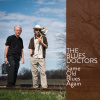
Same Old Blues Again (2018) is the new album from The Blues Doctors (Adam Gussow and Alan Gross), a two-man band from Mississippi. For USA customers only. All others (including Canada and Mexico) should order item MBH-006-INT, which is priced slightly higher to cover the cost of international shipping.
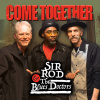
Come Together (2020) is the debut album from Sir Rod & The Blues Doctors (Rod Patterson, Adam Gussow, and Alan Gross), a trio based in Atlanta and Mississippi. For USA customers only.
$15.00
blues harmonica - blues harp - harmonica lessons - harmonica instruction - harmonica tabs - learn to play harmonica - blues harp tabs - learn to play blues harp - video harmonica lessons - harmonica teacher -
jazz harmonica - jazz harp